
Happy Workplace

Cameo Communications attaches great importance to employees’ labor rights, as well as creating a happy and safe workplace, providing employees with friendly and equal work opportunities, implementing gender equality policies, and fostering an atmosphere of mutual respect. We offer market-competitive remunerations to enhance employees’ loyalty to the Company, reduce turnover rate, and ensure the stable development of company operations. Cameo Communications also has a comprehensive education and training system, we regularly organize various training courses to strengthen employees’ professional capabilities and enhance their competitiveness in the workplace; provide a transparent promotion channel allowing employees to anticipate future career development possibilities; and promote positive labor-management interactions where employees can speak freely and express their opinions in labor-management meetings, and the Company also responds in good faith to reach consensus from labor and management. In addition, Cameo Communications has adopted the ISO 45001 Occupational Health and Safety Management Systems to enhance the Company’s management performance in occupational safety and health, effectively safeguarding the physical and mental well-being of employees. Finally, giving back to society, Cameo Communications not only consistently achieves excellent revenue performance but also actively cooperates with the Group’s policies to continuously engage in public welfare activities and care for disadvantaged groups, fulfilling its social responsibilities。
Employee Overview
Cameo Communications treats employees equally, eliminating any labor conditions that may lead to workplace inequality through various equality measures, and safeguarding employees’labor rights。
Human Rights Protection
Cameo Communications values employee rights and fosters a friendly environment that protects human rights. The company, in accordance with the principles set forth in human rights conventions such as the United Nations (UN) Universal Declaration of Human Rights, UN Global Compact, UN Guiding Principles on Business and Human Rights, and the International Labor Organization Declaration on Fundamental Principles and Rights at Work, adoption internationally recognized fundamental human rights. These include respecting employees’freedom of association, caring for vulnerable groups, prohibiting child labor, eliminating all forms of forced labor, eliminating discrimination in employment and occupation, preventing any acts that violate human rights, ensuring gender equality, and treating all employees fairly. Cameo Communications’ compensation policy also ensures that employees’ salaries are not differentiated based on gender, age, race, religion, or political stance。
At the same time Cameo Communications adheres to labor human rights laws at each operating base and periodically disseminates important information on human rights protection and labor rights to some current employees. In addition, Cameo Communications also provides reporting channels for employees to use. After receiving a report, a dedicated person-incharge will conduct a due diligence investigation and keep the whistleblower’s personal information confidential. If the report is verified to be true, Cameo Communications is committed to not treating the whistleblower unfavorably. There were no records of human rights violations in the current year。
Employee statistics
Cameo Communications is a well-known manufacturer of network communication products. In terms of recruitment and talent retention, during the selection process, the Company leverages new technologies and offers competitive compensation levels, combined with structured interviews to ensure alignment between candidates and the Company’s brand values attracting exceptional talent to join the team and continuously injecting innovative energy and vitality into Cameo Communications. All full-time employees of Cameo Communications are on indefinite contracts. The Company’s commitment to creating a friendly workplace and a comprehensive learning roadmap provides a long-term and stable work environment, allowing employees to fully commit to their work, which helps safeguard their economic well-being and achieve talent retention。
Company employees are primarily categorized as direct and indirect personnel. Following the production capacity reduction and workforce adjustment in 2023, direct production line personnel in the first half of 2024 were reduced through natural attrition, with the female proportion remaining largely consistent with 2023. Regarding employee age distribution employees under 50 years of age account for approximately 84%, representing a 3% decrease from 2023. Cameo Communications currently maintains a workforce primarily composed of middle-aged and experienced employees, with senior managers leading younger teams. The workforce structure remains stable with no concerns regarding labor shortages。
At Cameo Communications’ Taiwan operations, 100% of senior management positions are filled by local talent, demonstrating the Company’s commitment to collaborating with local communities to identify talent and attract exceptional talents to work locally. This approach helps gain recognition from local communities and further enhances the local economic situation
。


Note:Figures are as of the end of the year (December 31)。
Full-time employees refer to employees whose weekly working hours reach the statutory working hour limit; part-time employees refer to those whose weekly working hours do not reach the statutory working hour limit and work only partial hours, such as part-time student workers and hourly workers。
| Diversity statistics / year | 2022 | 2023 | 2024 | ||||||
|---|---|---|---|---|---|---|---|---|---|
| Number of people |
Percentage | Number of people |
Percentage | Number of people |
Percentage | ||||
| Directors | Gender | Male | 7 | 100% | 6 | 86% | 6 | 86% | |
| Female | 0 | 0% | 1 | 14% | 1 | 14% | |||
| Age | Under 50 | 0 | 0% | 2 | 29% | 2 | 29% | ||
| 50 or above | 7 | 100% | 5 | 71% | 5 | 71% | |||
| Education | Master’s degree or above | 2 | 29% | 7 | 100% | 7 | 100% | ||
| Bachelor’s degree | 5 | 71% | 0 | 0% | 0 | 0% | |||
| Employees Staff | Direct personnel |
Gender | Male | 100 | 16% | 60 | 14% | 57 | 14% |
| Female | 249 | 41% | 138 | 32% | 131 | 31% | |||
| Age | Under 30 | 90 | 15% | 43 | 10% | 36 | 9% | ||
| 30 – 39 | 158 | 26% | 89 | 21% | 85 | 20% | |||
| 40 – 49 | 85 | 14% | 58 | 13% | 53 | 13% | |||
| 50 or above | 16 | 3% | 8 | 2% | 14 | 3% | |||
| Education | Doctor | 0 | 0% | 0 | 0% | 0 | 0% | ||
| Master’s degree | 0 | 0% | 0 | 0% | 0 | 0% | |||
| Bachelor’s degree | 103 | 17% | 67 | 15% | 67 | 16% | |||
| Junior college | 42 | 7% | 18 | 4% | 18 | 4% | |||
| Vocational high school | 122 | 20% | 71 | 16% | 68 | 16% | |||
| Senior High school | 61 | 10% | 36 | 8% | 28 | 7% | |||
| Junior high school | 20 | 3% | 6 | 1% | 7 | 2% | |||
| Elementary school | 1 | 0% | 0 | 0% | 0 | 0% | |||
| Indirect personnel |
Gender | Male | 144 | 23% | 136 | 31% | 133 | 32% | |
| Female | 120 | 20% | 100 | 23% | 98 | 23% | |||
| Age | Under 30 | 24 | 4% | 31 | 7% | 38 | 9% | ||
| 30 – 39 | 63 | 10% | 55 | 13% | 47 | 22% | |||
| 40 – 49 | 126 | 21% | 100 | 23% | 91 | 13% | |||
| 50 or above | 51 | 8% | 50 | 12% | 55 | 3% | |||
| Education | Doctor | 1 | 0% | 2 | 0% | 4 | 1% | ||
| Master’s degree | 37 | 6% | 41 | 9% | 49 | 12% | |||
| Bachelor’s degree | 162 | 26% | 141 | 32% | 134 | 32% | |||
| Junior college | 51 | 8% | 41 | 9% | 32 | 8% | |||
| Vocational high school | 11 | 2% | 9 | 2% | 9 | 2% | |||
| Senior High school | 1 | 0% | 1 | 0% | 2 | 0% | |||
| Junior high school | 1 | 0% | 1 | 0% | 1 | 0% | |||
| Elementary school | 0 | 0% | 0 | 0% | 0 | 0% | |||
Note: The calculation method is as follows:
Percentage of female directors = (number of female directors at year-end / number of directors at year-end) * 100%。
Percentage of direct personnel aged under 30 = (total number of direct personnel under the age of 30 at year-end / total number of employees at year-end) * 100%。
Percentage of indirect personnel with master’s degree = (total number of indirect personnel with master’s degree at year-end / total number of employees at year-end) * 100%.。
| New and departed employees / year | 2022 | 2023 | 2024 | |||||||
|---|---|---|---|---|---|---|---|---|---|---|
| Total number |
Number of employees in service at the end of the year |
Percentage (note) |
Total number |
Number of employees in service at the end of the year |
Percentage (note) |
Total number |
Number of employees in service at the end of the year |
Percentage(note) | ||
| New employees | ||||||||||
| Age | Under 30 | 82 | 115 | 71.3% | 43 | 74 | 58.1% | 24 | 74 | 32.4% |
| 30 or older but under 40 | 86 | 220 | 39.1% | 22 | 144 | 15.3% | 18 | 132 | 13.6% | |
| 40 or older but under 50 | 59 | 211 | 28.0% | 22 | 158 | 13.9% | 25 | 144 | 17.4% | |
| 50 or above | 12 | 67 | 17.9% | 5 | 58 | 8.6% | 4 | 69 | 5.8% | |
| Gender | Male | 97 | 244 | 39.8% | 55 | 196 | 28.1% | 39 | 190 | 20.5% |
| Female | 142 | 369 | 38.5% | 37 | 238 | 15.5% | 32 | 229 | 14.0% | |
| Education | Doctor’s degree | 0 | 1 | 0.0% | 2 | 2 | 100% | 3 | 4 | 75.0% |
| Master’s degree | 18 | 37 | 48.6% | 20 | 41 | 48.8% | 24 | 49 | 49.0% | |
| Bachelor’s degree | 82 | 265 | 30.9% | 26 | 208 | 12.5% | 29 | 201 | 14.4% | |
| Junior college | 19 | 93 | 20.4% | 4 | 59 | 6.8% | 4 | 50 | 8.0% | |
| Vocational high school | 77 | 133 | 57.9% | 22 | 80 | 27.5% | 10 | 77 | 13.0% | |
| Senior High school | 26 | 62 | 41.9% | 10 | 37 | 27.0% | 0 | 30 | 0.0% | |
| Junior high school | 17 | 21 | 81.0% | 7 | 7 | 100% | 1 | 8 | 12.8% | |
| Elementary school | 0 | 1 | 0.0% | 1 | 0 | 0.0% | 0 | 0 | 0.0% | |
| Region | Taipei | 28 | 163 | 17.2% | 10 | 135 | 7.4% | 23 | 118 | 19.5% |
| Hsinchu | 5 | 5 | 100.0% | 14 | 16 | 87.5% | 16 | 29 | 55.2% | |
| Tainan | 206 | 442 | 46.6% | 68 | 281 | 24.2% | 32 | 270 | 11.9% | |
| Suzhou | 0 | 3 | 0.0% | 0 | 0 | 0.0% | 0 | 2 | 0.0% | |
Note 1: Figures are calculated based on the total number of employees as of the end of the year (December 31).
Note 2: Hiring rate = (Total number of new employees of the category in the year / Total number of employees of the category at year-end) * 100%.
e.g. female employee hiring rate = (total number of new female employees in the year / Total number of female employees at year-end) * 100%.
| New and departed employees / year | 2022 | 2023 | 2024 | |||||||
|---|---|---|---|---|---|---|---|---|---|---|
| Total number | Number of employees in service at the end of the year |
Percentage (Note) |
Total number | Number of employees in service at the end of the year |
Percentage (Note) |
Total number | Number of employees in service at the end of the year |
Percentage (Note) |
||
| Employee turnover | ||||||||||
| Age | Under 30 | 49 | 115 | 42.6% | 72 | 74 | 97.3% | 19 | 74 | 25.7% |
| 30 or older but under 40 | 85 | 220 | 38.6% | 92 | 144 | 63.9% | 16 | 132 | 12.1% | |
| 40 or older but under 50 | 59 | 211 | 28.0% | 76 | 158 | 48.1% | 40 | 144 | 27.8% | |
| 50 or above | 10 | 67 | 14.9% | 28 | 58 | 48.3% | 10 | 69 | 14.5% | |
| Gender | Male | 105 | 244 | 43.0% | 102 | 196 | 52.0% | 45 | 190 | 23.7% |
| Female | 98 | 369 | 26.6% | 166 | 238 | 69.7% | 40 | 229 | 17.5% | |
| Educational background |
Doctor’s degree | 0 | 1 | 0.0% | 1 | 2 | 50.0% | 1 | 4 | 25.0% |
| Master’s degree | 21 | 37 | 56.8% | 16 | 41 | 39.0% | 17 | 49 | 37.4% | |
| Bachelor’s degree | 90 | 265 | 34.0% | 83 | 208 | 39.9% | 33 | 201 | 16.4% | |
| Junior college | 23 | 93 | 24.7% | 36 | 59 | 61.0% | 13 | 50 | 26.0% | |
| Vocational high school | 52 | 133 | 39.1% | 74 | 80 | 92.5% | 13 | 77 | 16.9% | |
| Senior High school | 11 | 62 | 17.7% | 35 | 37 | 94.6% | 7 | 30 | 23.3% | |
| Junior high school | 6 | 21 | 28.6% | 21 | 7 | 300% | 1 | 8 | 12.5% | |
| Elementary school | 0 | 1 | 0.0% | 2 | 0 | 0.0% | 0 | 0 | 0.0% | |
| Region | Taipei | 42 | 163 | 25.8% | 40 | 135 | 29.6% | 40 | 118 | 33.9% |
| Hsinchu | 0 | 5 | 0.0% | 3 | 16 | 18.8% | 2 | 29 | 6.9% | |
| Tainan | 162 | 442 | 36.4% | 258 | 281 | 80.1% | 43 | 270 | 15.9% | |
| Suzhou | 0 | 3 | 0.0% | 0 | 2 | 0.0% | 0 | 2 | 0.0% | |
Note 1:Figures are calculated based on the total number of employees as of the end of the year (December 31)。
Note 2:Turnover rate = (Total number of departed employees of the category in the year / Total number of employees of the category at year-end) * 100%。
e.g. turnover rate of employees aged under 30 = (Total number of departed employees aged under 30 in the year / Total number of employees aged under 30 at year-end) * 100%。
Job Suitability
A robust human resources foundation is key to Cameo Communications’ sustainable operations. To attract outstanding talents, the Company provides competitive market-level remuneration and benefits, and assigns work positions based on employees’ technical skills and job functions to ensure optimal person-job fit. The Company rewards employees with outstanding performance and long-term contributions through a transparent performance evaluation and reward system, fostering a healthy atmosphere of fair competition within the organization. This encourages employees to invest greater effort in their work performance and actively participate in company affairs, further shaping Cameo Communications’corporate culture of shared prosperity. Regarding promotions, when promotion information is made transparent and public, employees with excellent work performance receive advancement opportunities, which motivates employees to learn from exemplary standards. This enables the Company to continuously cultivate more outstanding talents. The Company also schedules educational training programs for employee development, allowing employees to continue growing in their respective professional fields and realize their self-worth. In addition, Cameo Communications establishes multiple communication channels to engage in dialogue with employees, enabling them to provide timely feedback, to which the Company responds constructively, maintaining harmonious and trustful labor-management interactions。
Remuneration and benefits
| Policies/ Commitments |
|
|
|---|---|---|
| Target | short term |
|
| medium to long term |
|
|
| Responsible department / Grievance mechanism |
|
|
| Resources invested in the year |
|
|
| Evaluation mechanism / outcomes |
|
|
Cameo Communications’ remuneration structure is based on individual academic qualifications, job experiences, professional expertise, and job functions, with regular reviews of industry salary levels for appropriate adjustments. The Company offers employees with compensation packages that exceed local legal requirements and are competitive in the market based on the Company’s achievement rates of annual operational goals and profitability performance. Regular performance and career development reviews are conducted according to the performance evaluation management procedures, with evaluation results linking employee transfers, promotions, salary adjustments, and bonuses for motivation.
This allows employees with specialized technical expertise to grow into professionals in their respective fields through their own efforts, while employees with management capabilities and leadership potential can advance to management levels, providing ample career development opportunities。
Overall, Cameo Communications does not differentiate remuneration based on individual physical or psychological differences. As employees’ tenure with the Company increases and their industry knowledge and experience expand, the Company is pleased to share profits with them. Concrete results are demonstrated in the year-on-year growth of both the average and median annual salaries of non-managerial employees in Taiwan, enabling employees to contribute their expertise to the Company while ensuring financial stability, thereby enhancing colleagues’ loyalty and a sense of belonging to the Company。
Furthermore, to promote the work efficiency, Cameo Communications offers employees with various welfare measures and a comfortable office environment. By organizing employee welfare activities from time to time, employees can relieve their work stress while positive interactions among coworkers can be fostered。
(i) Employee Welfare Measures
- In addition to providing various benefits and insurance in accordance with the Labor Standards Act, the Company purchases publications for each departments as needed and organizes various educational training programs to enable employees to enrich themselves. The Company’s Articles of Association clearly stipulates the ratio of employee profit distribution, implementing the concept that employees are shareholders,
encouraging participation in opinions and teamwork to jointly operate and advance company business. When issuing new shares, the Company reserves a certain percentage of shares for employee subscription in accordance with the Company Act。 - The Company has legally established an Employee Welfare Committee, selecting welfare committee members to handle employee welfare matters. The welfare fund sources include 1.5% of capital allocated at establishment and capital increases, and 0.1% of monthly revenue. The Committee formulates annual plans and budgets, regularly convenes Committee meetings to discuss, decide, and organize various welfare activities, and publishes the income and expenditure status of welfare funds。
- Employees are enrolled in group insurance upon employment, with the option for employee family members to join at their own expense。
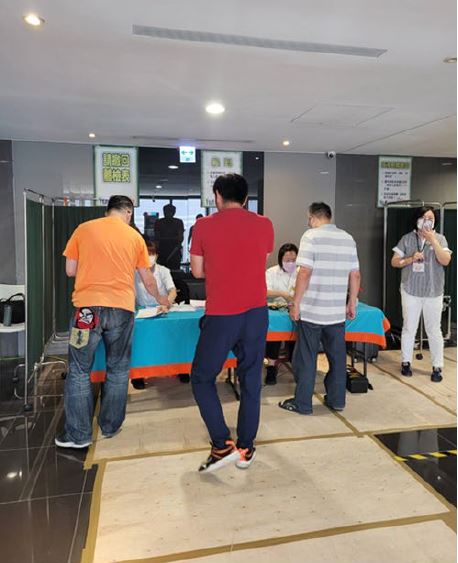
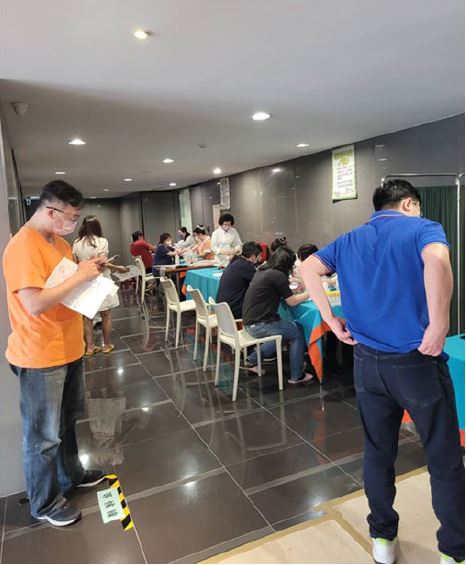
- Regular health examinations exceeding regulatory requirements are conducted, with physicians arranged to provide consultation on employee health examination results。
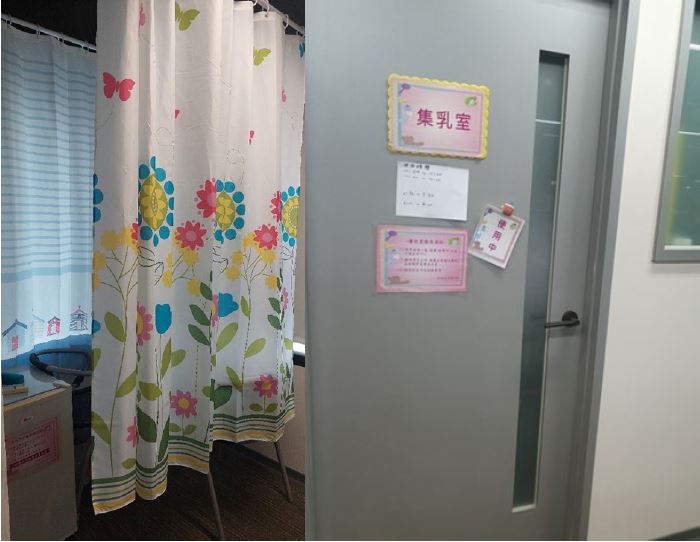
- A nursery room is established for employee use。
- The Company employs visually impaired masseurs as full -time employees to provide massage services for employees, caring for disabled employees and fulfilling corporate social responsibility。
| Employee Welfare Program | Taiwan |
| Group insurance | V |
| Wedding / bereavement allowances | V |
| Maternity allowance | V |
| Hospitalization condolences | V |
| Birthday allowance | V |
| Holiday bonuses / coupons | V |
| Year-end bonuses | V |
| Employee awards | V |
| Health examination | V |
| Employee parental leave / year | Gender | Statistics | ||
| 2022 | 2023 | 2024 | ||
| Number of employees eligible for parental leave | male | 5 | 2 | 6 |
| female | 5 | 5 | 8 | |
| Number of employees applying for parental leave (calculated by the year of the leave start date) | male | 3 | 1 | 1 |
| female | 12 | 4 | 1 | |
| Number of employees scheduled to return after parental leave (A) (calculated by the year of leave start date) | male | 2 | 2 | 0 |
| female | 18 | 7 | 2 | |
| Number of employees who actually returned after parental leave (B) (Including early returns) (calculated by the year of return) | male | 1 | 0 | 0 |
| female | 11 | 2 | 1 | |
| Return rate (B/A) | male | 50.00% | 0.00% | – |
| female | 61.11% | 28.57% | 50.00% | |
| Number of employees who returned after parental leave in the previous year and remained employed twelve months after returning (C) | male | 0 | 0 | 0 |
| female | 2 | 11 | 1 | |
| Retention rate (C / previous year B) | male | – | 0.00% | – |
| female | 40.00% | 100.00% | 50.00% | |
| Note 1 : The number of employees eligible for parental leave refers to the number of male and female employees who have applied for maternity leave or paternity leave in the past three years。 Note 2:Return rate = (total number of employees who actually returned in the year / total number of employees scheduled to return in the year) * 100%。 Note 3:Retention rate = (total number of employees who remained employed twelve months after returning in the previous year / total number of employees who actually returned in the previous year) * 100%。 |
||||
| Employees reviewed in 2024 | Number of reviews |
Total number of employees |
percentage | |
| gender | male | 179 | 190 | 94.21% |
| female | 219 | 229 | 95.63% | |
| Employee category | Direct | 178 | 188 | 94.68% |
| Indirect | 220 | 231 | 95.24% | |
| Note 1:Number of people reviewed: Full -time employees with less than three months of service are not required to undergo performance appraisals。 Note 2:Total number of employees as of year -end (December 31)。 |
||||
Finally, to safeguard employees’ financial planning for retirement, Cameo Communications’ pension system is divided into a defined benefit plan (old pension system) and a defined contribution plan (new pension system). For personnel who retire or have their employment relationships terminated, if they have intentions to continue employment, the Company will assist in providing information on relevant employment channels。
(ii)Retirement system and its implementation
The Company has established retirement management procedures in accordance with the Labor Standards Act, and all employee retirement matters are handled according to the relevant retirement regulations and the Company’s retirement management procedures. Since July 1, 2005, in accordance with the Labor Pension Act, the Company has implemented the new labor pension system. For employees who have chosen to adopt this system, no less than 6% of each of their monthly wages is contributed by the Company monthly as retirement funds to the individual labor pension accounts。
The Company complies with the Labor Standards Act and the Labor Pension Act and the applicable regulations are as follows :
1.Voluntary retirement:
Employees may apply for voluntary retirement under any of the following conditions: (Those who choose to adopt the Labor Pension Act shall be handled according to the corresponding provisions of the Act)
(1) Having served for 25 years or more。
(2) Having served for 15 years or more and attained the age of 55。
(3) Having served for 10 years or more and attained the age of 60。
2.Mandatory retirement:
(1) Having attained the age of 65。
(2) Being unable to perform job duties due to mental or physical disability。
3.Preferential retirement:
55 Plan: Refers to employees whose years of service at the Company combined with their age equals to 55 (applicable only to employees who
began service before June 30, 2005, with the bases calculated with the number of years of service in the old system under the Labor Standards Act)

Talent development
| Policies / Commitments |
|
|
|---|---|---|
| Target | Short term |
|
| medium to long term |
|
|
| Responsible department / Grievance mechanism |
|
|
| Resources invested in the year |
|
|
| Evaluation mechanism / outcomes |
|
|
For Cameo Communications, the key to sustainable corporate operations lies in employees’ continuous learning and growth. Educ ation and training serve as important pathways to ensure that human capital can continuously appreciate in value. Therefore, Cameo Communications has always emphasized employee train ing. The overall learning and development strategy is based on on-the-job training, combined with new employee training, specialized professional training, and management -level training as the main pillars to achieve annual objectives and meet different business requirements, establishing a comprehensive education and training system。
To enhance employees’ professional skills, Cameo Communications formulates training plans annually based on company development needs and implements training objectives, enabling employees to pursue longer-term careers while allowing the Company to benefit from employees’ growth and progress. Through internal training, the Company continuously transfers competencies and experience to relevant departments, assists colleagues in formulating learning and development directions, and serves as a basis for employees to plan their personal career paths。
When new employees report for duty, a dedicated personnel will explain internal regulations and occupational safety and health-related knowledge, followed by professional training conducted by their respective departments. Cameo Communications actively encourages employees to pursue professional courses within their business scope, with the goal of continuous colleague growth, providing diverse learning channels that enable employees to demonstrate their expertise and achieve self-fulfillment. Each department annually develops education and training plans based on their own needs and implements education and training programs. Employee development is divided into internal and external training. Internal training is arranged by each departments based on actual business needs, with personnel assigned to conduct departmental instruction. External training requires departments to submit applications based on business needs, and upon approval, designated personnel are selected to participate in courses organized by external institutions. employees who participate in training then share their training insights with coworkers from other departments, enabling relevant personnel to apply what they have learned. In response to the diversification trend in education and training in
recent years, and to enable employees to access information from different perspectives, Cameo Communications encourages employees to participate in language courses, social communication courses, and others organized by external institutions。
An annual training plan is developed to provide onboarding training for new employees, on-the-job training, and external training opportunities, supporting overall employee competency development. In 2024 , the average training hours per employee were approximately 9.64 hours. A total of NT$117,900 in subsidies was granted for external training based on professional competencies, resulting in the acquisition of 15 professional licenses/certificates. The breakdown is as follows:
| Statistics / Year | 2022 | 2023 | 2024 | |||||||
| hours | Total number of people |
Average | hours | Total number of people |
Average | hours | Total number of people |
Average | ||
| Average training hours per employee (Note 1) | 895.5 | 613 | 1.46 | 1226 | 434 | 2.82 | 4037.5 | 419 | 9.466 | |
| Average training hours per employee by gender (Note 2) | female | 511 | 369 | 1.83 | 633.5 | 238 | 2.66 | 2542.5 | 229 | 11.10 |
| male | 384.5 | 244 | 1.58 | 592.5 | 196 | 3.02 | 1495 | 190 | 7.87 | |
| Average training hours per employee by category (Note 3) | Direct | 494 | 349 | 1.42 | 177.5 | 198 | 0.90 | 3012.5 | 188 | 16.02 |
| Indirect | 401.5 | 264 | 1.52 | 1048.5 | 236 | 4.44 | 1025 | 231 | 4.44 | |
| Note 1:Average training hours per employee: Total training hours for all employees in the year / Total number of employees in the year。 Note 2:Average training hours per female employee: Total training hours for female employees in the year / Total number of female employees in the year。 Note 3:Average training hours for each category of employees: Total training hours for employees of the category in the year / Total number of employees of the category in the year。 |
||||||||||
Professional Certification Subsidies and Training Hours
As of November 30, 2025, the Company’s certification subsidy expenses and accumulated training hours are summarized below. Both internal and external training programs remain ongoing.
| Professional Competency Area | Number of Certifications / Certificates | Expenses (NTD) | Cumulative Training Hours |
| Internal Audit & Accounting | 4 | 14,000 | 24 |
| Quality Management | 2 | 14,175 | 28 |
| Occupational Safety | 16 | 31,300 | 140 |
| Total | 22 | 59,475 | 191.5 |
Employee Satisfaction
To continuously understand employees’ views on organizational operations and the working environment, the Company conducted its first employee satisfaction survey in November 2025 through a third-party survey platform, the “104 Employee Satisfaction Survey System.” The survey was conducted on an anonymous basis using partial sampling and was coordinated by the Human Resources Department.
The survey covered eight key dimensions, including sustainable operations, corporate culture, leadership, teamwork, job content, compensation and benefits, training and development, and information transparency, providing a comprehensive assessment of overall employee satisfaction.
- Questionnaire completion rate: 79%
- Valid response rate: 68%
- Overall satisfaction score: 73.2 points
(equivalent to 4.39 points on a 6-point scale)
The results indicate a generally positive level of employee recognition regarding the Company’s overall operations and working environment.
Continuous Improvement Initiatives Based on Survey Results
- Optimization of Compensation and Incentive Systems
Building on the existing incentive framework, the Company will continue to review and optimize its annual salary adjustment mechanisms and various incentive programs. In consideration of business performance and external market trends, the Company will evaluate the feasibility of diversified compensation schemes to balance internal equity and market competitiveness.
- Strengthening Talent Development and Career Growth
In addition to current performance appraisal, promotion, and job rotation training mechanisms, the Company will continue to plan diverse career development activities and training programs. These initiatives aim to support employees’ development based on their interests and capabilities, meet competency enhancement needs, and support the Company’s medium- and long-term talent planning.
- Enhancing Communication, Engagement, and Social Participation
The Company will further strengthen internal communication channels and information transparency, promoting more diversified interaction mechanisms to enhance employees’ understanding of and alignment with the Company’s management philosophy and development direction. At the same time, the Company will deepen social engagement and contribution initiatives, encouraging employee participation to foster positive connections between the Company and society.
Future Outlook
The Company plans to conduct employee satisfaction surveys on a regular basis and will continue to track the implementation and effectiveness of improvement measures. The results will serve as an important reference for the ongoing enhancement of human resource management and organizational development.